

What I mean by ‘Nature Farming’ is not the same as ‘natural farming’, ‘organic farming’, or ‘natural farming methods’. Explanations for all of these things come up when you do a search online for ‘nature farming’. But nothing turns up for what I call nature farming. Hopefully this post will show up in the search engine results list soon.
I am literally harvesting nature.
I’m not doing conventional farming using natural techniques, or practicing organic or permaculture farming (although where I do actually grow things on purpose, I do adhere to those principles).
What I’m farming is already present there in nature.
I do grow American ginseng seedlings, so that’s close to the general perception. But I also forage for rocks and other items to use in making my paints for my artwork, and to use in my crafts.
For the most part, the plants I sell in my nursery business already grow here naturally. I encourage some of them to multiply by dividing or transplanting or seeding them in more areas, but the habitats to support them already exist here. No tilling involved, though sometimes I do make nursery beds by creating rock wall terraces on the hillsides.
The terraces are in the deep shade under trees with the kinds of leaves that make good mulch for ginseng. They help to keep the pots from washing away during rains and when the creek floods. And they provides easy access for seedlings when I need to fill orders. It’s also a staging/holding area for the items I used to bring with me to market. I don’t do markets often anymore, but soon I’ll have a studio on site at the ginseng garden. It’ll double duty as a space for the workshops, garden visitors, art studio, and art gallery. Keep up with this development by visiting my studio page or joining my newsletter.

Nature Farming and American Ginseng
American ginseng seedlings are the main things that use the terraced beds. I transplant the seedlings to the other habitats and I also put them in pots sell them at market. When it’s not growing season, I sell them as dormant, bare root plants. Wild Ozark is the only certified ginseng nursery in Arkansas. Wild ginseng lives here naturally, and I’ve purchased seeds to grow even more of it. I keep the wild populations separate from the wild-simulated.
When I say ‘wild-simulated’ that means I’m growing the ginseng in the same way it would grow in the wild. All I do is plant the seed in a space where it can flourish. I do have one small area set aside as a teaching environment. It’s my Ginseng Habitat Demonstration Garden. It’s not quite a natural area yet, because it is still recovering from being logged many years ago. As the trees get bigger it will return to a natural dense shade forested habitat.
In addition to the ginseng seedlings and habitat pots, I also keep many of the companions in propagation beds so I can easily transplant them to pots and sell them, or harvest bare root plants for dormant shipping. Those plants include goldenseal, bloodroot, black cohosh, blue cohosh, a variety of ferns, spicebush plants, pawpaw tree seedlings, and doll’s eyes. I also keep some of my other favorites like trillium, Dutchman’s breeches, and trout lilies, too.
Stewardship of Mother Nature versus Stewardship by Me
The Ginseng Habitat Demonstration Garden is not left completely to nature because I’m taking out things like honeysuckle and wild roses. I’m thinning some of the trees I don’t want there to favor some of the ones I do.
The reason for that is to speed up the process that will make it a better habitat for the American ginseng and the companion plants that also grow in the same sort of environment. While the rest of Wild Ozark is pretty much left up to the stewardship of Mother Nature, this demonstration garden is being tended by me.
While the garden isn’t an ideal environment yet for the ginseng, it will eventually be so and the plants are doing well enough in the meantime. My process of doing this is helpful to others who want to do the same thing on their own property. Additionally, and the main reason I chose this spot, is because it is in a location close to the front gate and I don’t mind sharing that location with visitors.
Nature Farming means Harvesting Nature
I harvest things provided by nature. Things naturally growing, dropped to the ground, or dried on the stem. Wildcrafting is the gathering of wild plants. I’ll make ointments or extracts and teas from the medicinal plants. These aren’t products I sell. I keep them for our own household use. The parts I gather include fruits (persimmons, wild plums, wild cherries, pawpaw), flowers (echinacea and beebalm), berries (elderberries, spicebush berries, raspberry, blackberry, etc.), seeds (lobelia), nuts (hickory, acorns), stems (witch hazel, spicebush) or roots (ginseng, goldenseal, black cohosh).
Nature Farming to Create Art
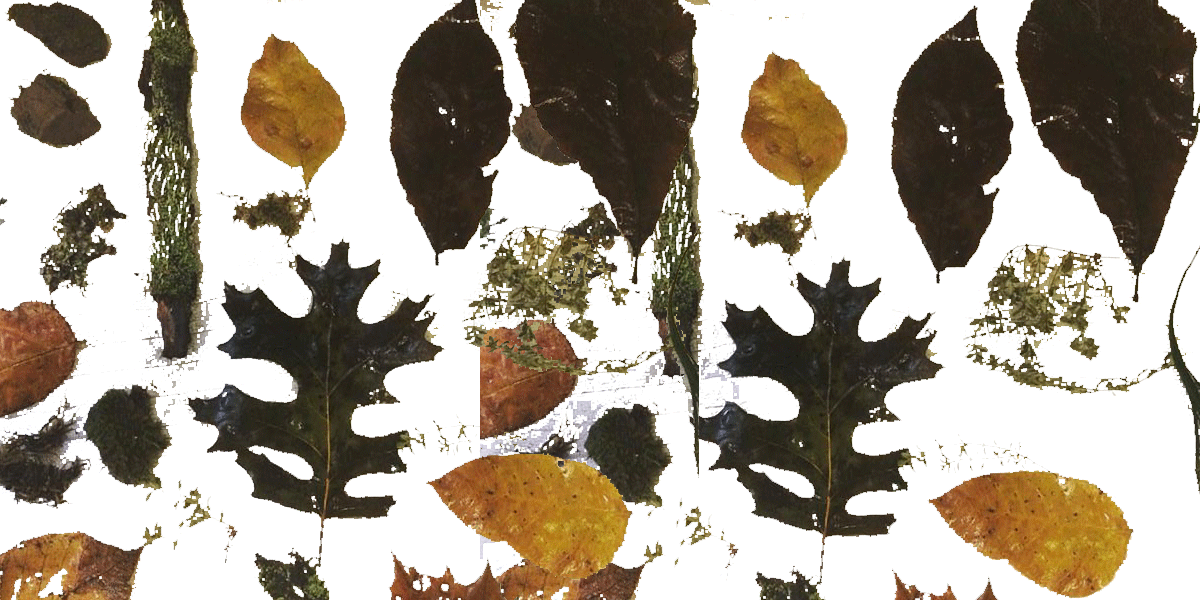
So here’s where my nature farm departs from what most people normally think of when they think ‘farming’. The bulk of what Wild Ozark produces is botanical items most people barely notice. Usually it’s lying on the ground … like rocks, gnarly root pieces in the creed, lichens and mosses that fell from the tree. I collect a lot of botanicals. Glycerin preserved leaves are vital to some of the crafts I make. Sticks, vines, leaves, bits of bark that fell from a tree… all treasures to me.
These are things I simply pick up and put in my bucket during my morning walks.


Before I started painting, I used all of these things to create my Forest Folk, Fairy Houses, and Fairy Gardens. Once my studio is ready for me to use, I’ll begin making these and hosting workshops for others to make some.
I also use botanicals to decorate product displays, frames, or to make settings for my sculptures from native clay (another item I use in my ‘nature farming’. You can see where I’ve used twigs, acorns, leaves, dried grass, moss and small ferns in the following photos.
All of this can be messy work that spreads out, so I haven’t been able to indulge so much since my husband returned from his overseas job. Ha, it’s hard to keep a tidy house when there’s the forest floor all over the counters and table (which is fine when I’m the only one at home). But the studio will be my workspace soon, and I can’t wait.
Crafts using Botanicals


Pigments from Rocks
I collect colorful rocks that I find here on our property and everywhere I go. Some are from the creek and some are just lying on the ground or in the driveway. When I crush these rocks, I can use that powder to make the paints I need for my artwork. I paint a variety of subjects using oil paints I make from foraged pigment sources. Here are some of my paintings:


Indirect Harvests from my Nature Farm
Art, photography, stories and workshops. Being around nature all of the time inspires me to write, draw, and take photos. I love sharing what I learn and enjoy with others, so I’m always happy to be contacted about doing workshops on topics like nature journaling, ginseng growing or habitat identification, and creating nature art. I’m not an expert on photography, so I’ll leave workshops on that to the ones that are.
Thank you for Dropping By!
Thanks for visiting with Wild Ozark website and taking the time to read about what I do here. Come by and visit the Ginseng Habitat Demonstration Garden if you’re in the area during spring and summer. You can see my art in progress and finished art on the walls of my new studio/gallery soon. My exhibit schedule is one way to know where I’ll be and when if I’m going to a market or holding a workshop, and my Open Studio days will be posted there too, or email in advance for an appointment if you like. Click here to get all of my contact information.

.
Author/Artist Info
________________________________
In the summer of 2018 I began making watercolor paints from the rocks, clay, and other resources of our land here in the Ozarks. In 2023 I began experimenting with the same pigments in oils. I call them Wild Ozark Paleo Paints, because they’re made in a way very close to the same way paints were made when man (or woman) first put a hand-print on the wall of a cave. I use very small amounts of outsourced pigment for blue, white, and sometimes yellow to offer a greater range of hues built upon the earthy local pigments. My specialty is painting nature, specifically the nature that surrounds me here in the remote hills of northwest Arkansas.
Click here to join my mailing list.
Madison Woods
@wildozark (Instagram, Twitter, Threads and FB)
madison@wildozark.com
Want to join me for workshops or see my art?
Coming soon! I have a new Studio in the Works 🙂
The building is here and I’m finishing out the interior. I hope to begin offering classes/workshops by the end of September 2026 and host Open Studio days regularly right here at Wild Ozark, where the possibilities for nature experiences (including nature art) run rampant.
The best way to stay informed is to sign up for my newsletter and check off the box ‘Studio News’ (or whatever is closest to that description). I’m updating there as I meet the goalposts and will announce anything planned as soon as I get firm dates.

 wpDiscuz
