Category: Experiments
-
Woven Willow – using one of Nature’s Renewable Resources
A while back I posted about the woven willow fence I was building as a retaining wall in my garden. Since then I have come to love willow branches. They’re one of my favorites of nature’s renewable resources now. After … Read the rest “Woven Willow – using one of Nature’s Renewable Resources”
Written by

-
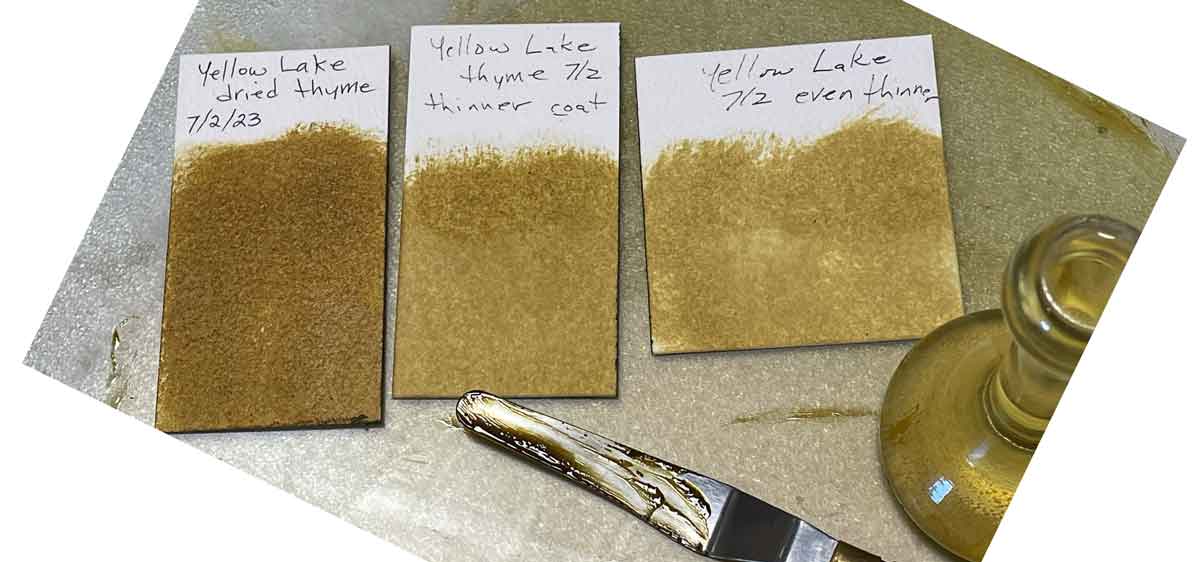
A Yellow Paint Experiment | Lake pigment from thyme
Back when I made my very first set of paints, I had a really nice yellow. I’d made several yellows from various plants and did lightfast tests on them. All failed except for the one, gorgeous yellow. Not only did … Read the rest “A Yellow Paint Experiment | Lake pigment from thyme”
Written by
-
A Stable Blue from Asiatic Dayflower (Commelina communis)
One day I smashed a flower petal from the Asiatic dayflower between my thumb and forefinger. It’s a small plant that grows sparsely in the shady, moist areas along the driveway. While it’s not native to the Ozarks, it is … Read the rest “A Stable Blue from Asiatic Dayflower (Commelina communis)”
Written by

-
The Orange in Osage Root Bark
The color in the Osage root bark is quite vivid and I’m trying to capture that pigment. My first attempt wasn’t very successful. I used water to try and extract the orange. I simmered it on low heat, then strained … Read the rest “The Orange in Osage Root Bark”
Written by
-
Bone Black
I made bone black, from a cow vertebra that I charred inside a small tin inside the wood stove. Previously I’d used charred wood from hickory and oak. It has been a difficult paint to re-wet and it never reached … Read the rest “Bone Black”
Written by

-
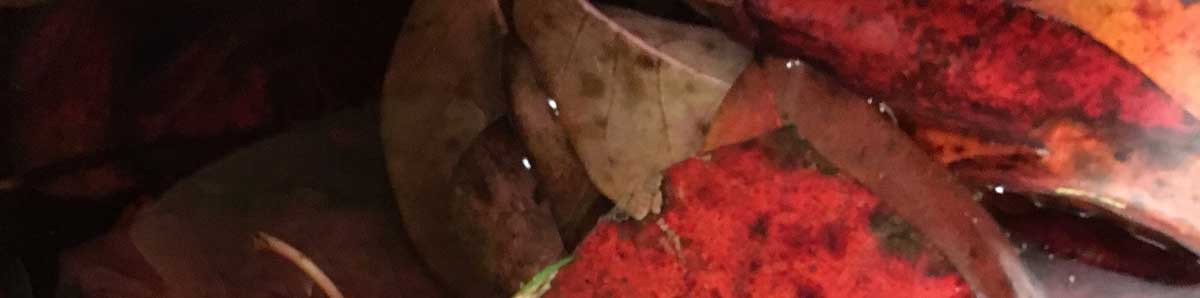
Red leaves of black gum (Nyssa sylvatica)
Black gum leaves begin turning deep red near the end of summer, sometimes long before any other leaves are starting to think of autumn. This color is made from the late summer red leaves of black gum (also called black … Read the rest “Red leaves of black gum (Nyssa sylvatica)”
Written by
-
Plant Pigments – Experimenting and Searching for Green
Generally I don’t use the plant pigments because they’re fugitive, meaning they fade over time. Sometimes they completely disappear. However, I’ve found two sources that actually intensify with exposure to light (full sunshine) and so I am experimenting with extracting … Read the rest “Plant Pigments – Experimenting and Searching for Green”
Written by